 Services
The ASTANA VISION KIDS clinic provides diagnostics and treatment for a wide range of eye conditions in children and adolescents: myopia, hyperopia, astigmatism, strabismus, amblyopia, and inflammatory eye diseases. Special attention is given to children with progressive myopia and complex refractive errors. Prescription of soft, rigid, and orthokeratology contact lenses is performed.
Our services
Ophthalmological consultation and examination for children from 0 to 18 years of age.
Optical correction of myopia, hyperopia, and astigmatism.
Treatment of strabismus and binocular vision disorders.
Management of progressive myopia in children and adolescents.
Treatment of dacryocystitis in newborns.
Children’s optics. Frames and manufacturing of glasses of any complexity.
The standard examination includes:
- Strabismus angle measurement
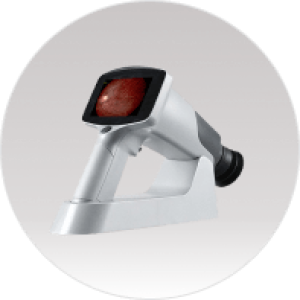
- Refractometry (using a portable autorefractometer)
- Retinoscopy (examination to measure myopia, hyperopia, astigmatism)
- Ophthalmoscopy (using a head‑mounted binocular indirect ophthalmoscope)
- Prescription of glasses / soft contact lenses
- Ultrasound examination (B‑scan / A‑scan) (examination of ocular structures using ultrasound waves)
- Visometry (determination of visual acuity)
- Refractometry (measurement of myopia, hyperopia, astigmatism)
- Tonometry (measurement of intraocular pressure)
- Optical biometry (measurement of ocular structure dimensions)
- Corneal topography (assessment of corneal shape and thickness)
- Strabismus angle measurement
- Biomicroscopy (examination of the anterior segment using a slit lamp)
- Cycloplegia / mydriasis (pharmacological accommodation paralysis for refraction assessment; pupil dilation for fundus examination)
- Ophthalmoscopy / cycloscopy (fundus (retina) examination to detect pathology)
- Optical coherence tomography (examination of ocular structures at the ultrastructural level)
- Perimetry (visual field measurement)
Myopia control
- Prescription of orthokeratology (night) lenses
- Orthokeratology treatment using standard‑design OK lenses, including consumables
- Orthokeratology treatment using customized‑design OK lenses, including consumables
- Glasses with peripheral myopic defocus. Prescription of Stellest spectacle lenses
- Soft contact lenses with defocus. Prescription of Prima Bio Bi‑focal soft contact lenses
- Treatment using soft contact lenses with defocus
- Long‑term therapeutic atropinization
Probing of the nasolacrimal duct
- Removal of mucous plug
- Irrigation of the nasolacrimal duct with saline and antiseptic solution
Strabismus treatment
- Strabismus treatment using the Synoptophore device
- Surgical treatment of strabismus.
Healthy, full‑term children with no obvious external eye pathology do not require an ophthalmologist visit. However, a paediatrician may refer them to an eye specialist in the presence of:
- Tearing, epiphora (excessive tearing);
- Redness, discharge from the eyes;
- Lack of gaze fixation;
- Opacification of the optical media;
- Involuntary oscillatory eye movements, etc.;
- Pupillary abnormalities.
Parents do not have to wait for a referral and can see a doctor on their own initiative. A common pathology in the youngest children is conjunctivitis; dacryocystitis typically manifests from 2 months of age.
When it comes to prescribing glasses for young children, atropinization (for a period of 3 days) is performed. This is a diagnostic procedure. Glasses are prescribed only 2 weeks after atropinization. A diagnosis is established and appropriate recommendations are given.
Appointment with a pediatric ophthalmologist.
The ASTANA VISION KIDS clinic, with its modern equipment and experienced pediatric ophthalmologists, offers a full range of diagnostic and treatment services for eye conditions in children.
You can book an appointment with a specialist:
– By phone;
– Through the form on the website;
– Via WhatsApp (button at the bottom right of the screen).
In addition, we would be happy to welcome you at any of the ASTANA VISION clinics in Kazakhstan and will do our best to ensure the eye health of your child!
Book an appointment
Leave your details and we will definitely contact you!
Equipment
Our specialists
Diagnostics for children.
-
Initial consultation€50
-
Repeat ophthalmologist consultation, outside of the doctor's prescribed follow‑up (within 1 month from the date of diagnostics).free
* – The clinic reserves the right to cancel or reschedule a diagnostic appointment if the patient presents with signs of inflammation, i.e., a «red eye.» Diagnostics at our clinic, which performs elective «clean» surgery, will only be possible after completing a course of treatment prescribed at the patient’s local polyclinic and achieving complete resolution of the inflammatory symptoms in the eye(s).
Video testimonials
Frequently Asked Questions About Pediatric Ophthalmology in Astana
At what age can a child be taken to an ophthalmologist?
From the first months of life. The clinic accepts children from 0 to 18 years. It is especially important to check vision when symptoms appear or when referred by a paediatrician.
Is eye examination painful for children?
No. All diagnostic procedures are painless. Special comfortable and portable devices are used for young children.
How long does a paediatric eye examination take?
On average 1–1.5 hours. This includes a full examination, refractometry, retinoscopy, ophthalmoscopy, and other necessary tests.
Is pupil dilation (atropinisation) needed for a child?
In young children, cycloplegia (atropinisation) is often required for accurate refraction measurement. Drops are administered for 3 days; glasses are prescribed 2 weeks later.
What conditions are treated in paediatric ophthalmology?
Myopia, hyperopia, astigmatism, strabismus, amblyopia ("lazy eye"), neonatal dacryocystitis, inflammatory diseases, and other conditions.
How can progressive myopia be managed in children?
A comprehensive approach is used: orthokeratology (night) lenses, spectacles and soft contact lenses with peripheral defocus (Stellest, Prima Bio Bi‑focal), and long‑term atropinisation.
What are orthokeratology lenses?
Rigid night lenses that are worn overnight, allowing the child to see clearly during the day without glasses or contact lenses. An effective method of myopia control.
When should I take my child to a paediatric ophthalmologist?
If there is tearing, redness, discharge, lack of fixation, strabismus, opacities, frequent blinking, or if the child complains of vision problems.
Can strabismus be treated in a child?
Yes. Treatment includes glasses, occlusion (patching), Synoptophore exercises, and, if necessary, surgical treatment.
How much does a paediatric eye examination cost in Astana?
Initial consultation and full examination – 23,000 ₸. Repeat consultation within 1 month of diagnostics is free of charge.
Should a healthy child have their vision checked?
It is not obligatory for healthy full‑term children without symptoms, but it is recommended at key ages: 1–2 months, 1 year, 3–4 years, and before starting school.
Do you fit contact lenses for children?
Yes. We fit soft contact lenses, rigid lenses, and orthokeratology (night) lenses, tailored to the child's age and diagnosis.
Can strabismus surgery be performed on children?
Yes. Surgical treatment for strabismus is performed in childhood when necessary, after conservative treatment.
How should I prepare my child for an ophthalmology appointment?
Explain that it will be interesting and painless. Bring their favourite toy. If atropinisation is needed, get instructions on how to administer the drops in advance.