In its time, PRK (photorefractive keratectomy) was a breakthrough in ophthalmology. Before its advent, surgery for myopia, hyperopia, and astigmatism was performed with blades, not lasers.
After the first procedure in 1985, the method quickly gained widespread acceptance. Today, with the emergence of more modern and safer techniques, PRK is rarely prescribed, mainly when there are contraindications to other methods.
Features of PRK correction.
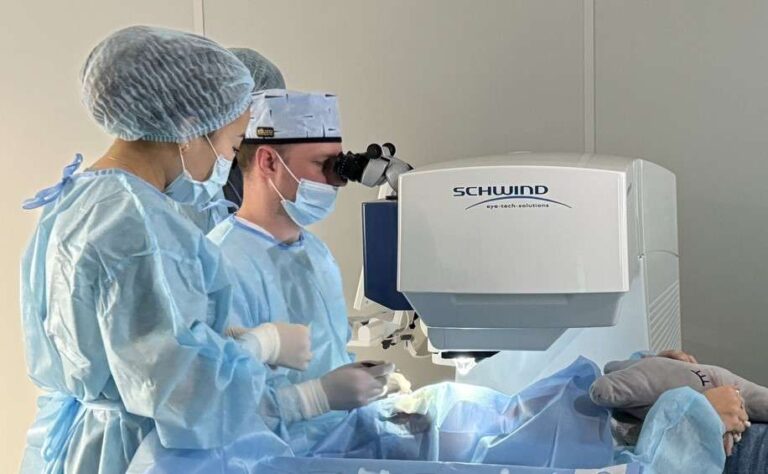
The principle of the procedure involves the complete removal of the corneal epithelium to gain access to the cornea. During the procedure, the cornea is reshaped using an excimer laser, acquiring the required parameters for proper light refraction.
It should be noted that photorefractive keratectomy is suitable for patients with very thin corneas, as it does not involve creating a flap from the superficial corneal layer.
Limits of PRK laser vision correction:
The procedure is performed under local anesthesia; the patient will not feel any pain or discomfort.
As early as the next day, it is possible to return to a comfortable lifestyle without restrictions. You can play sports and return to your usual work!
The surgery proceeds in several stages:
The surgery takes about 10 minutes for both eyes. In the first 2–3 days, some discomfort and pain may occur; rest at home and 1–2 follow‑up visits to the doctor are recommended.
The main rehabilitation period lasts about 7–10 days; special eye drops are prescribed for several weeks according to a schedule. Vision recovers gradually. When the ophthalmologist’s recommendations are followed, complications are rare.
PRK is a surface‑based correction method. Nevertheless, it has many advantages:
Among the disadvantages – a somewhat longer recovery period, a greater number of restrictions, and more pronounced pain on days 2–3.
Performance of PRK laser vision correction at the ASTANA VISION clinic.
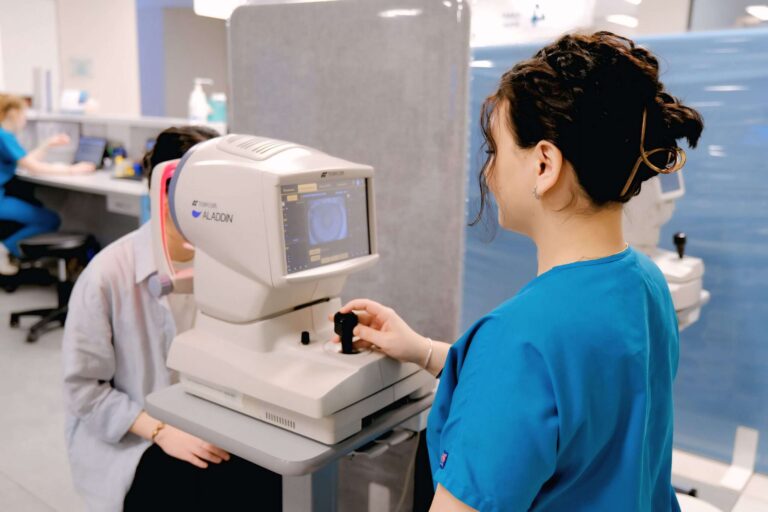
To minimise risks, pain, and discomfort for the patient during PRK (photorefractive keratectomy), the ASTANA VISION network uses the most gentle procedure possible, employing the StreamLight™️ Trans‑PRK «No Touch» system. However, even with this approach, the rehabilitation period will last several weeks.
Nevertheless, our doctors will provide all necessary recommendations both before and after the surgery. By following them, the patient can minimise post‑procedure discomfort.

 Services